


《Woven in Time - The Beautiful World》Crafts Special Exhibition
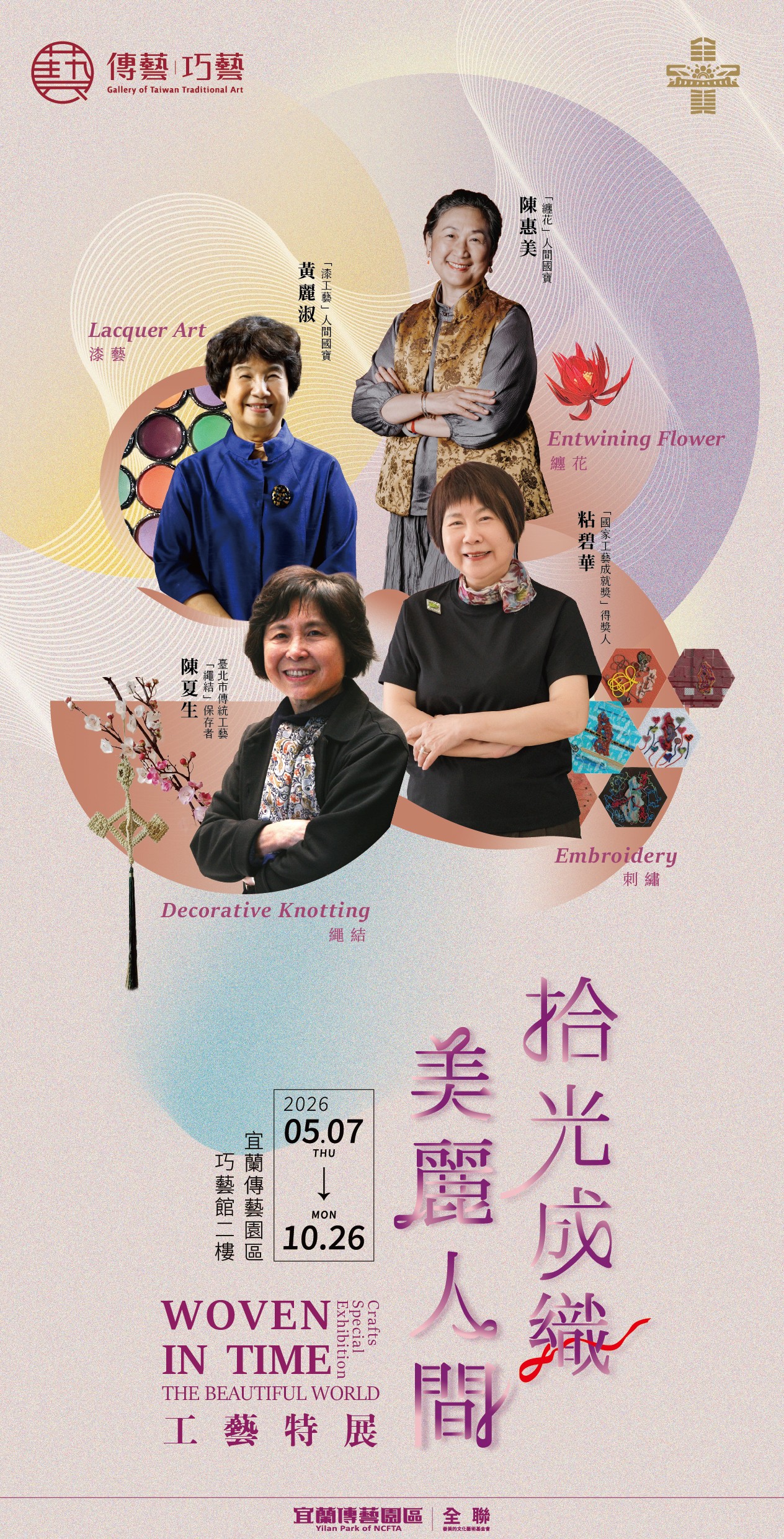
I. Exhibition Overview
Time is a journey one can look back upon. Through steady and unhurried accumulation, direction gradually becomes clear, and ideas are continually affirmed through practice.
Woven in Time marks the Sunmake Cultures Foundation’s 10th anniversary. Looking back on a decade devoted to craft, from early efforts in promotion, companionship, and learning, to today’s focus on connection, co-creation, and transmission, each step mirrors the nature of craft itself—requiring time to take shape.
This exhibition presents works by four distinguished female master artisans: Chen Hsia Sheng, Nien Pi Hua, Huang Lih Shwu, and Chen Huei Mei. Each specializes in a distinct traditional craft –Decorative Knotting, Embroidery, Lacquer Art, and Entwining Flower making. While their artistic languages differ, all are rooted in patience, repetition, and focus - qualities that also define the foundation’s work over the past decade.
Decorative knotting binds strands into intricate connections. Each knot follows a precise path and measured tension, echoing the relationships the foundation has cultivated over the years - interweaving craft, emotion, and culture among people.
Lacquer art responds to time through layering and polishing. Beneath its surface lies an indispensable process of waiting and quiet accumulation. Through sustained dedication, depth gradually forms, eventually revealing a steady and profound luster.
Embroidery uses the needle as a pen to inscribe time. Though each stitch is minute, together they gradually compose a complete image -much like every program, exhibition, and act of support over the past decade, woven together into what the foundation is today.
Entwining flower craft shapes form through careful wrapping. Soft materials require repeated adjustment and setting before they can bloom into a stable and elegant form. This patience reflects the foundation’s enduring commitment to detail and quality in the promotion of craft.
Woven in Time gathers not only the time held in the hands of these master artisans, but also the path the foundation has walked over the past ten years, step by step. Within this web of craft woven by time, works and journeys intersect -together forming a shared memory of this moment in time.
II. Artist Biographies
(1) Chen Hsia Sheng
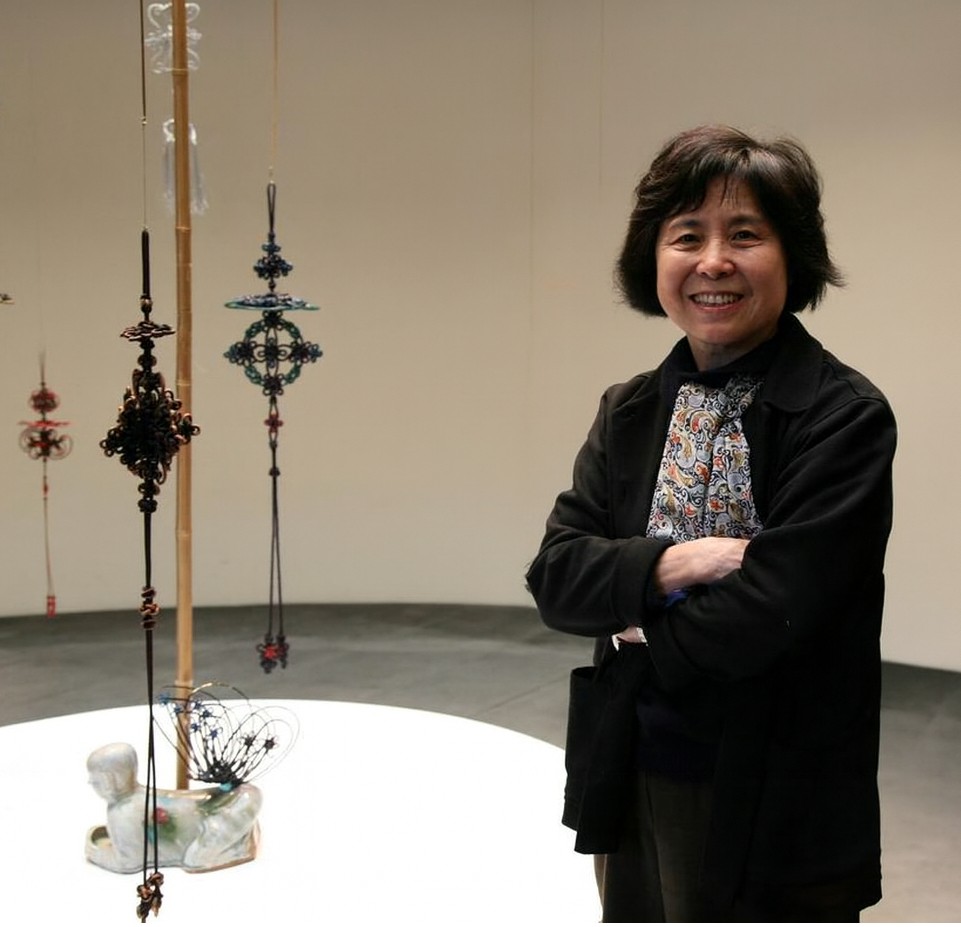
Recognized in 2022 as a preserver of Taipei’s intangible cultural heritage in traditional decorative knotting
Born in 1939,Chen Hsia Shengserved at the National Palace Museum from 1980 to 2001 in the Department of Antiquities, where she conducted research, conservation, and curation of decorative artifacts. She developed particular expertise in historical costume, jewelry appraisal, ruyi objects, and enamelware, organizing exhibitions and publishing specialized studies.
Since 1976, she has devoted her spare time to an in-depth study of the origins and evolution of traditional Chinese decorative knotting, while also developing innovative techniques. Drawing on her scientific background, she analyzes the structural logic of knotting patterns and has even expressed certain techniques through algebraic formulas to aid memorization. She further incorporates diverse materials such as metal, lacquer, and pigments, creating new works that expand the artistic possibilities of traditional knotting.
In addition to her creative practice, she has actively promoted the art through teaching, offering university courses, publishing instructional books, and presenting exhibitions both domestically and internationally. In 1996, she studied lacquer art under master Huang Lih Shwu, which led to the development of lacquer-knot works. In 2011, she received the Outstanding Fashion Figure Award at the Beijing Fashion Forum.
(2) Nien Pi Hua
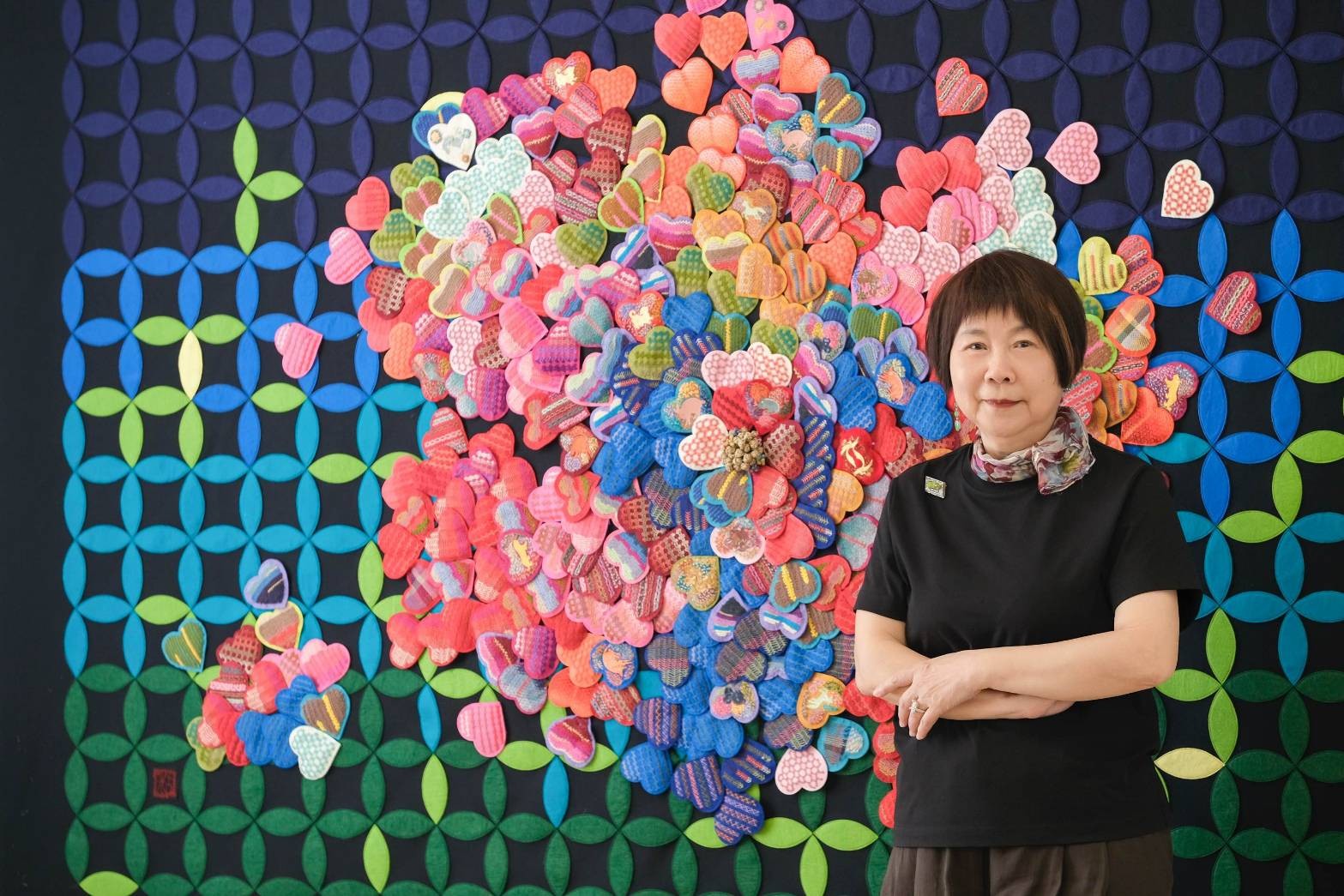
Recipient of the 2023 National Crafts Achievement Award
Born in 1947, Nien Pi Hua began her career in the import and export trade of fashion apparel, which sparked her interest in embroidery, jewelry, and costume history. She has extensively studied literature and archaeological reports related to these fields, creating embroidered jewelry and artworks while also contributing numerous written articles.
She later studied jewelry design and metalwork at the Royal College of Art in London and earned a master’s degree in textiles and fashion from Nottingham Trent University. Frequently invited to serve as an international juror, she continues to create works in metal, jewelry, embroidery, and mixed media.
Beyond her artistic practice, she actively promotes embroidery through exhibitions, lectures, and educational programs. She has generously offered courses for local communities and underserved groups, and has traveled to rural and Indigenous elementary schools to teach foundational embroidery techniques, dedicating herself to making embroidery widely accessible.
(3) Huang Lih Shwu
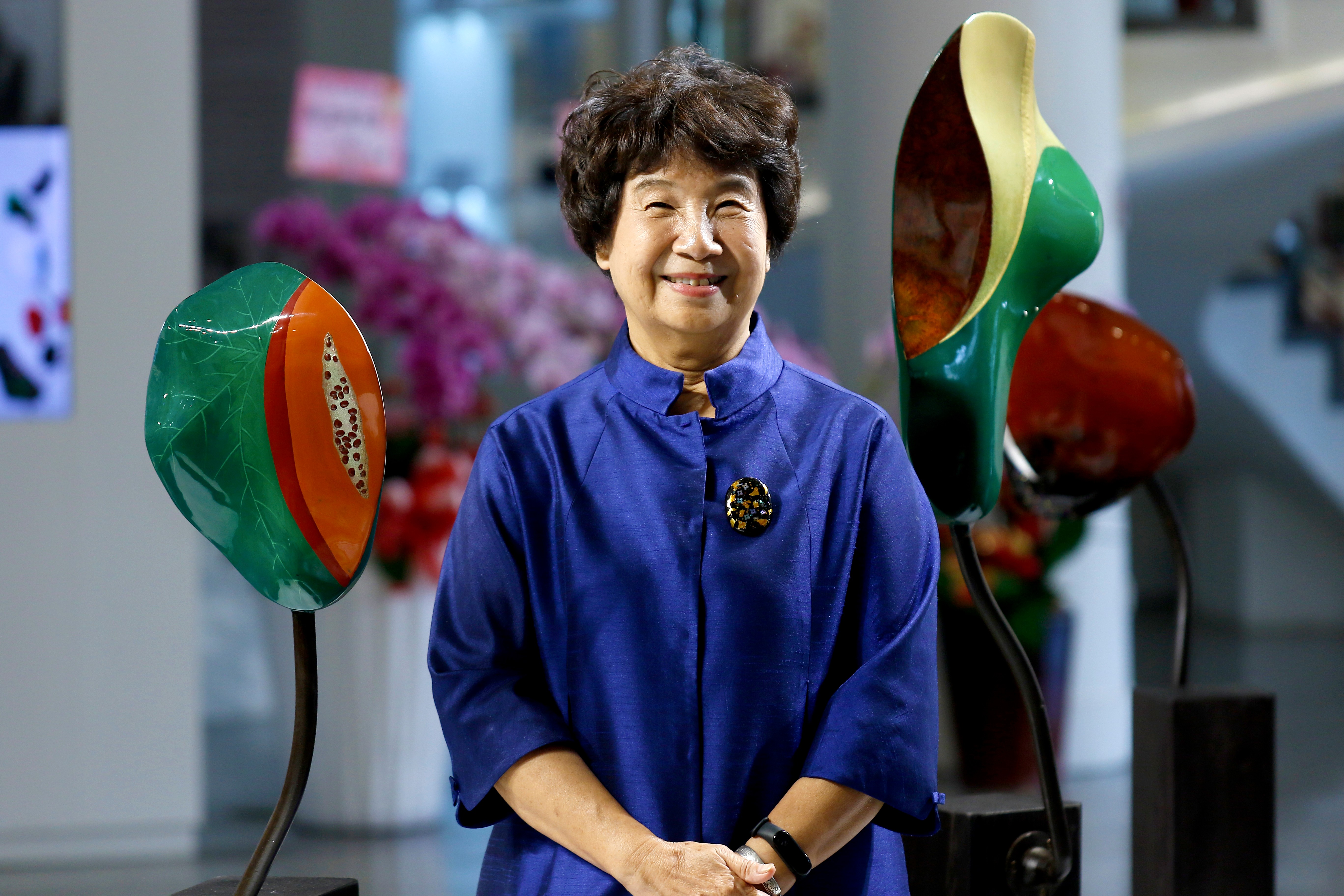
Recognized in 2020 by the Ministry of Culture as a preserver of the important traditional craft of lacquer art
Born in 1949, Huang Lih Shwu began working in 1977 at the Taiwan Provincial Handicraft Research Institute (now the National Taiwan Craft Research and Development Institute), where she was engaged in the design and development of bamboo craft products. She first studied bamboo weaving under master Huang Tu Shan, gaining a deep understanding of bamboo materials and processing techniques.
She later pursued traditional lacquer techniques under master Chen Huo Qing and became deeply captivated by the refined yet understated luster of lacquerware. Over time, she conducted extensive research into decorative lacquer techniques as well as the history of Taiwanese lacquerware.
She further advanced her studies in Japan at the Tokyo National Research Institute for Cultural Properties and the Okinawa Prefectural Institute of Arts and Crafts, focusing on lacquer techniques and restoration. Widely regarded as a leading expert in lacquer art, she possesses both broad and in-depth mastery of the field.
In 2009, she established her studio Youqi Garden, where she continues to teach and pass on nearly three decades of research and practice.
(4) Chen Huei Mei
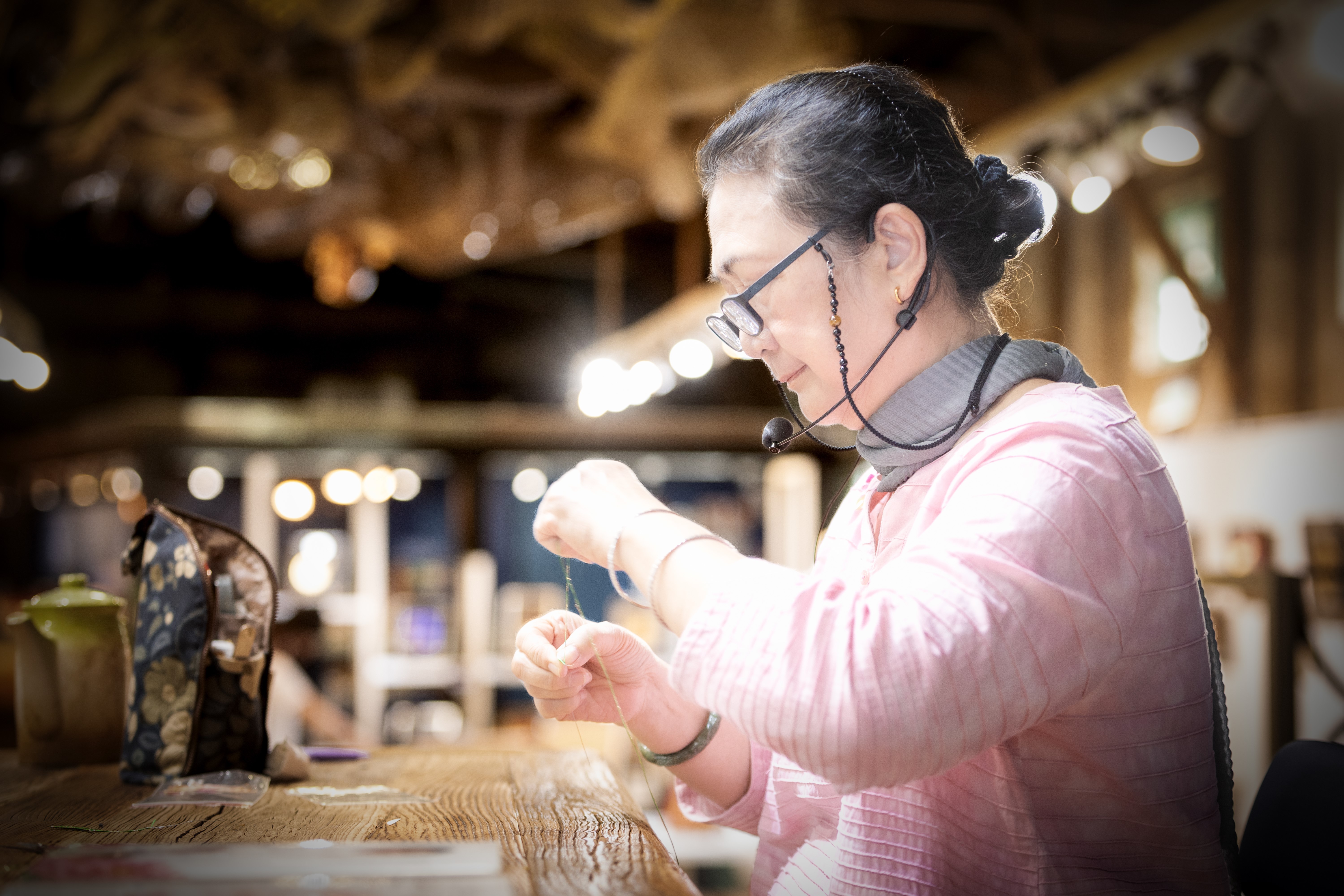
Recognized in 2020 by the Ministry of Culture as a preserver of Taiwan’s important traditional craft of entwining flower making
Born in 1950, Chen Huei Mei originally worked in leathercraft education and creation. In 1999, she met her mentor, Xie Chen Ai Yu, from whom she inherited the Minnan chun zai hua (Entwining Flower also known as Spring Flower or Blessing Flower) techniques.
Over the years, she has studied various traditions, including Hakka floral techniques and Kinmen decorative flower styles, integrating and transforming them into a distinctive personal artistic language. Entwining flower craft has since become her lifelong dedication and mission.
With more than two decades devoted to promoting the craft, she frequently presents solo exhibitions and conducts teaching programs across Taiwan. Her systematic approach to instruction reflects a strong commitment to transmission.
She has also participated in major international cultural exchange events and collaborated with fashion designers, bringing this traditional craft onto the global design stage. She has devoted herself wholeheartedly to the preservation and promotion of entwining flower craft.
