• sitemap
  • 搜尋
  • line
  • ig
  • fb
menuclose

Wenchang Temple

Wenchang Temple
Wenchang Temple
Wenchang Temple
Wenchang Temple
Wenchang Temple
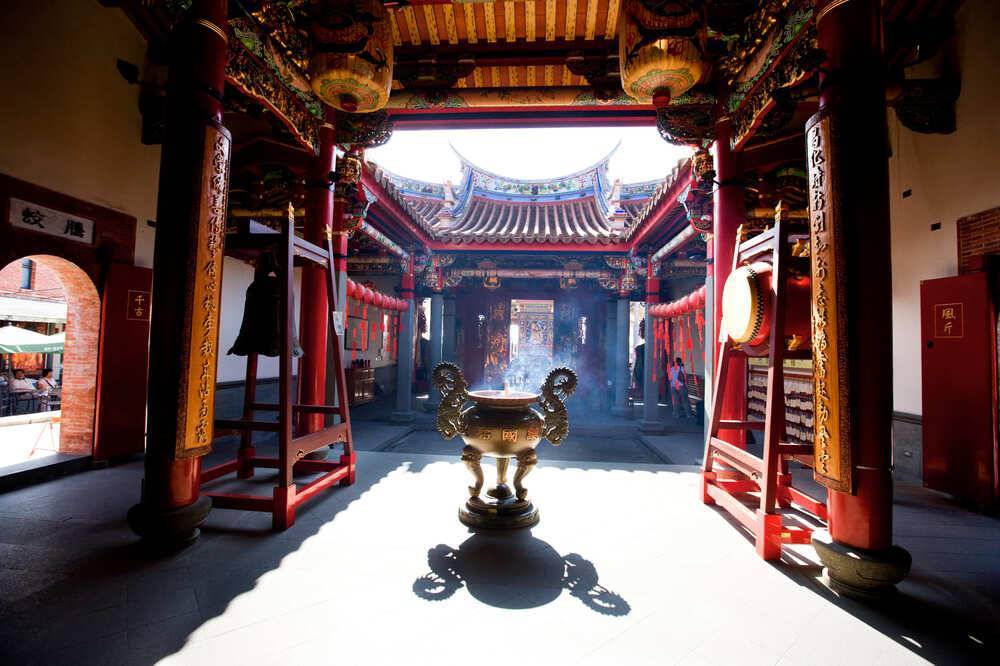
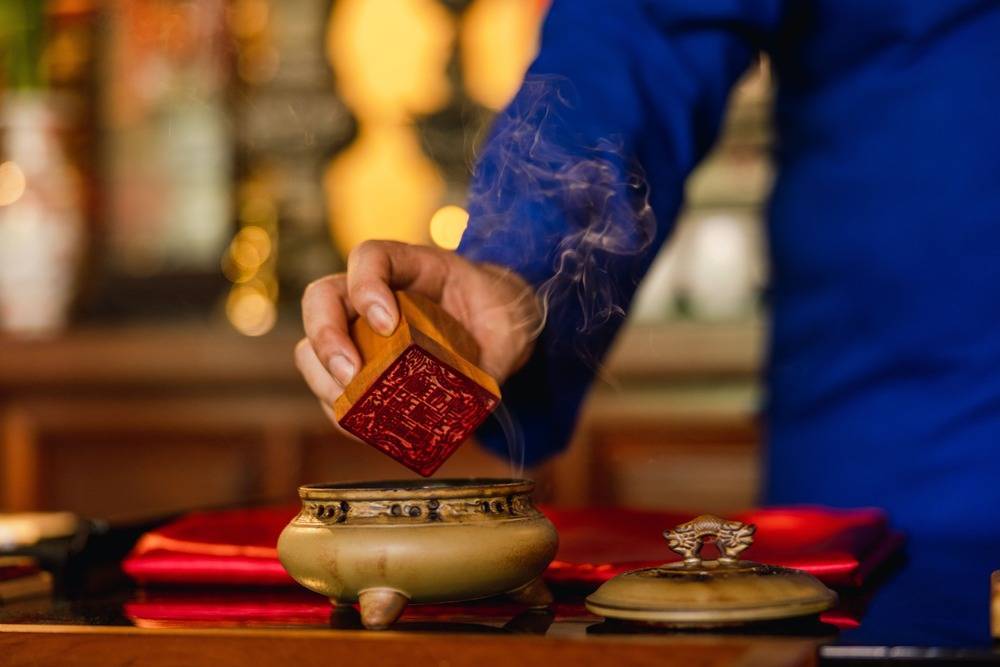
As Taiwan’s first government-built temple, Wenchang Temple is a traditional sanctuary building with two halls and two corridors. The main hall hosts five Wenchang gods as well as gods for traditional drama and craftsmanship. The Wenchang gods, as guardian angels for scholars and writers, are worshiped to bring culture and literature to the country, while the gods for traditional drama and craftsmanship are to help pass down the legacy of Taiwan’s traditional arts and workmanship.

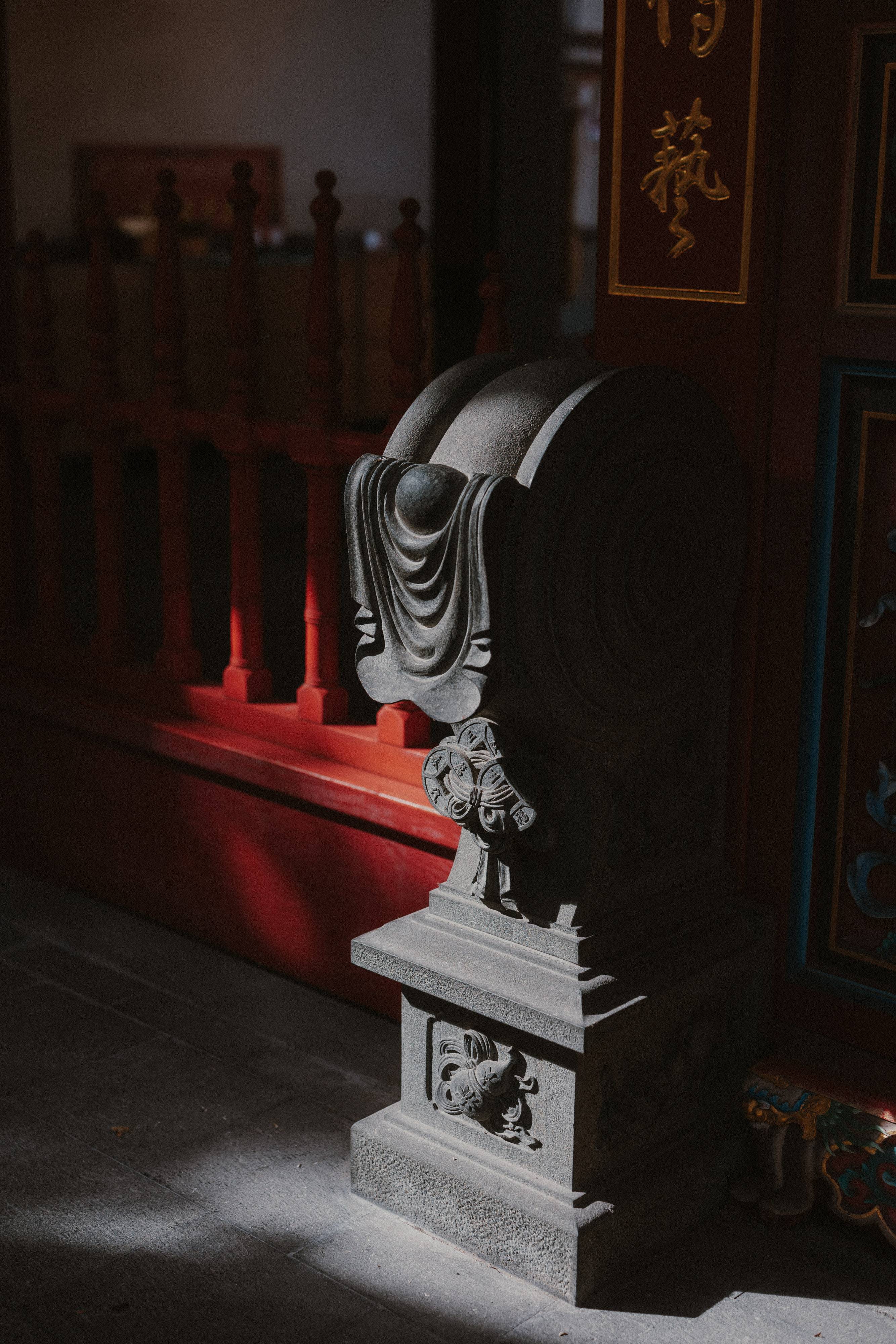
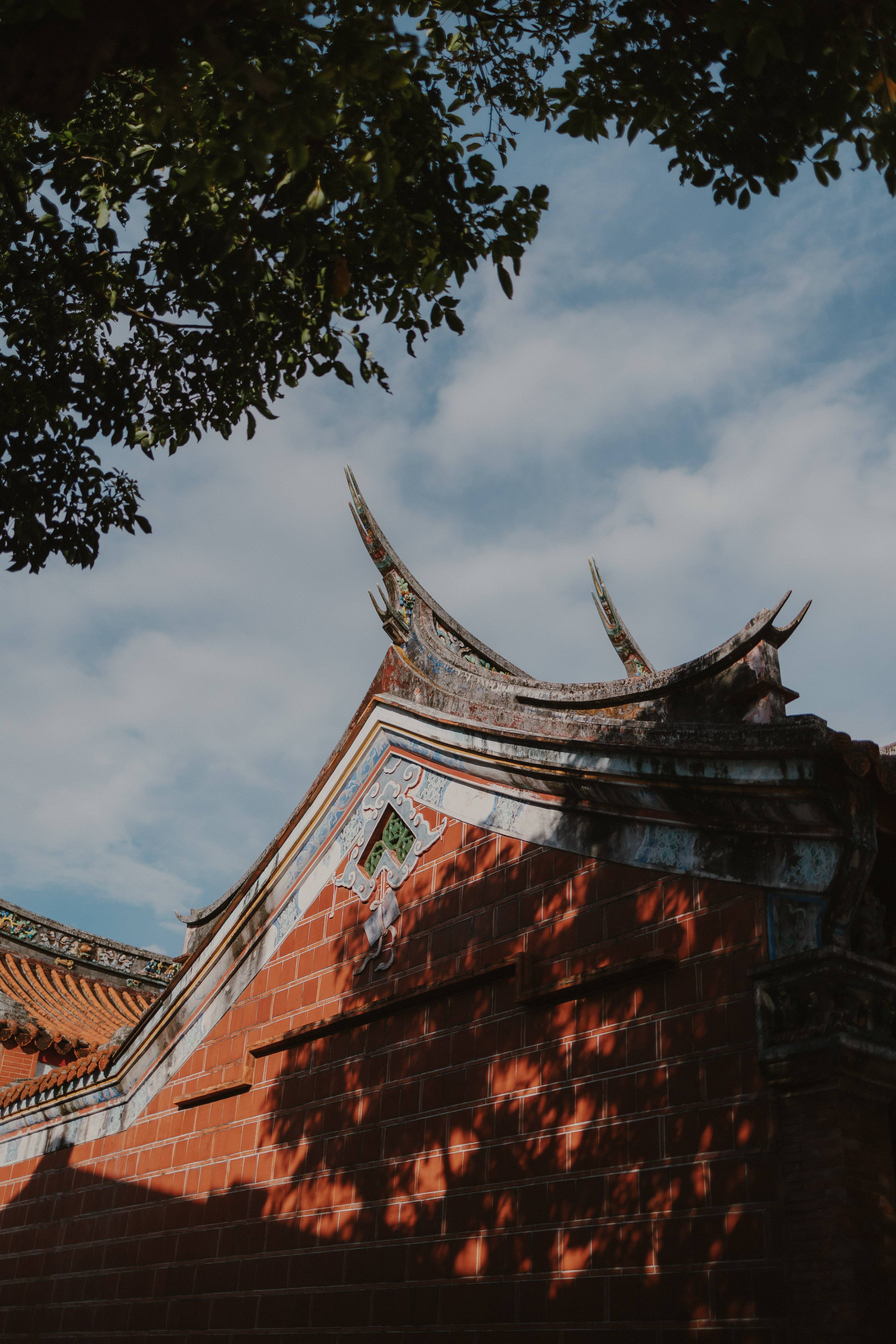
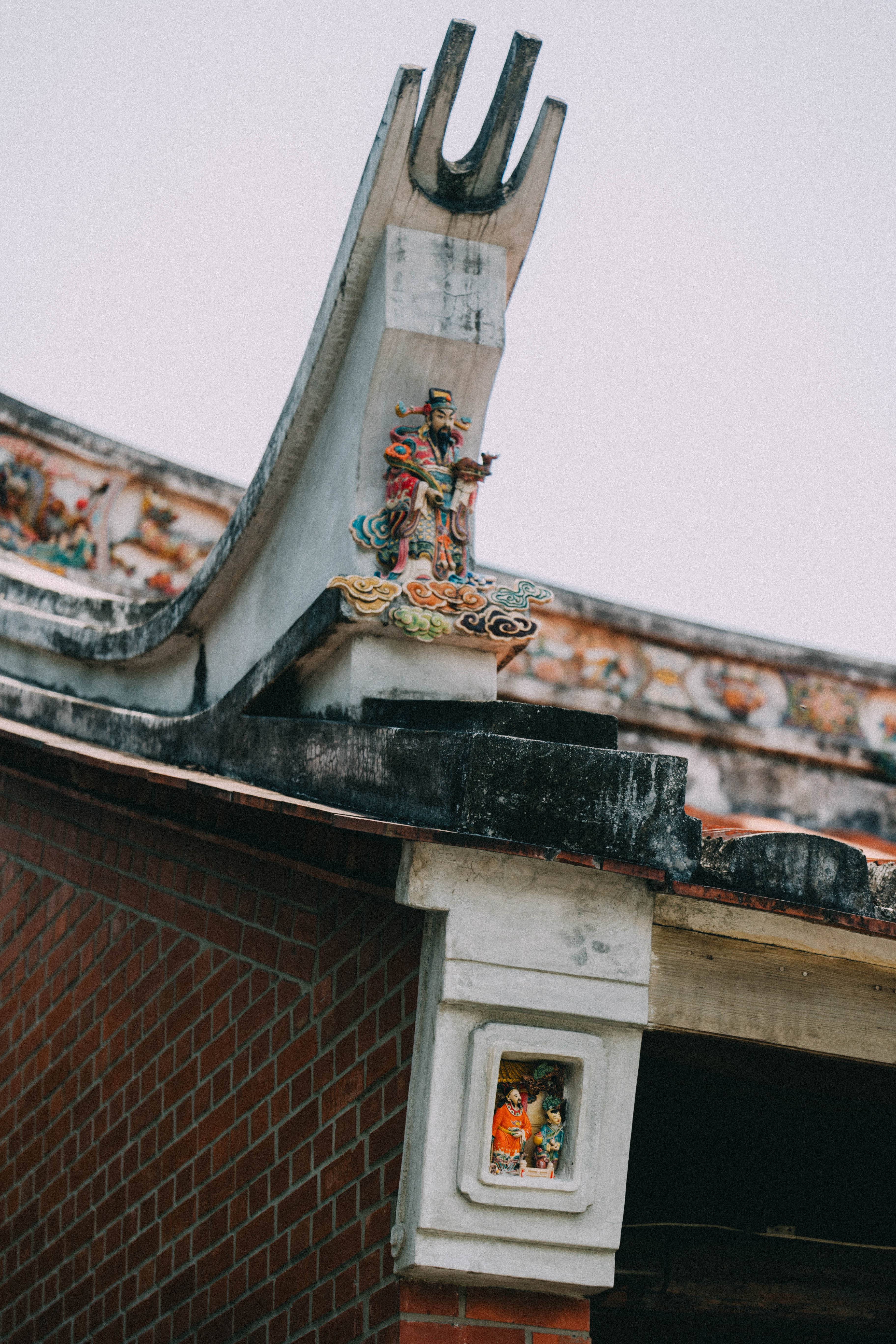
Located within the Yilan Park of the National Center for Traditional Arts (Yilan Park of NCFTA), Wenchang Temple was funded by the government. Its simple architectural form carries the ingenuity and craftsmanship of traditional artisans, making it an important center of spiritual culture in the park. The roof features minimal ornamentation and swallowtail ridges, resembling swallows drawing a graceful skyline. The temple enshrines the Five Wenchang Saints as its principal deities—Lord Wenchang, Holy Emperor Guan, Fuyou Dijun (Lu Dong-Bin), Lord Kui Xing of Academic Study, and Lord Zhu Yi of Academic Study. Lord Wenchang is regarded as a protector of scholars, with prayers offered for national prosperity and the cultivation of talent. Accompanying deities include music and theater patriarchs: Lord Xi-Chin, Marshal Tian Du, and Lord Meng Chang; and carpenter patriarchs: Master Lu Ban, Master Hu Ching, and Leaf Immortal of Masonry(荷葉先師). The worship of these deities reflects the hope for the continuation and flourishing of Taiwan’s traditional arts.


1. Buddha Sculptures

The sculptures follow the Quanzhou carving tradition, which is known for its intricate process and refined craftsmanship. The enshrined deities—music and theater patriarchs (Lord Xi-Chin, Marshal Tian Du, and Lord Meng Chang) and carpenter patriarchs (Master Lu Ban, Master Hu Ching, and the Leaf Immortal of Masonry)—were carved by Mr. Shih Chih-Hui, a recognized National Preserver of Important Traditional Art Techniques(國家重要傳統藝術技藝保存者). His artistry in Buddha sculpture holds particular significance in the preservation of Taiwan’s cultural heritage.


2. Five-Piece Offering Set

This set includes five ritual vessels placed on the altar: one incense burner, a pair of candlesticks, and a pair of vases. The set in Wenchang Temple was crafted by Chen Wan-Neng, another National Preserver of Important Traditional Art Techniques(國家重要傳統藝術技藝保存者).


3. Lanterns

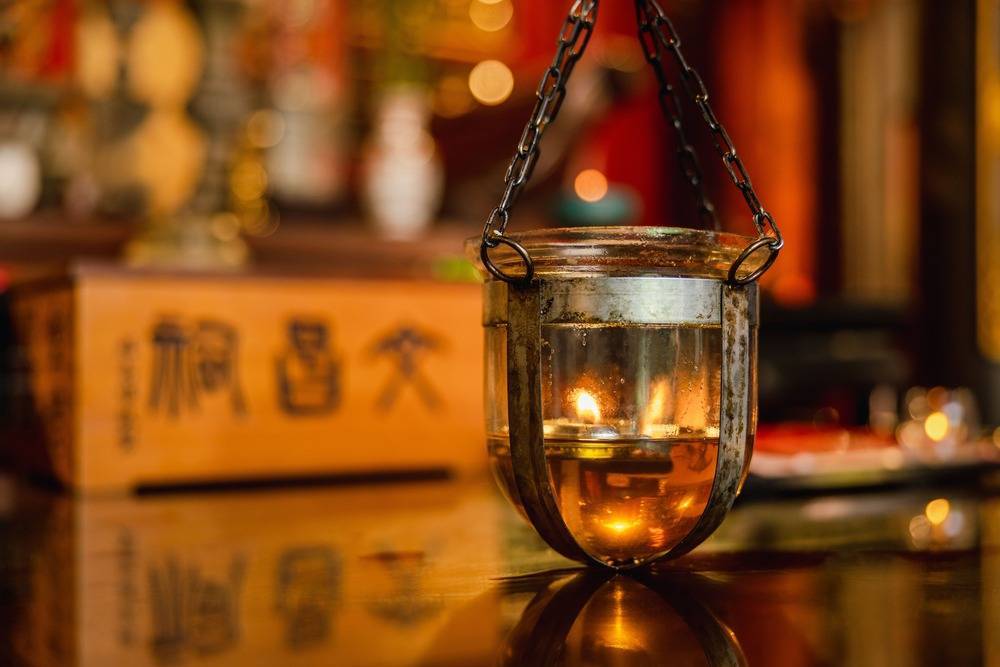
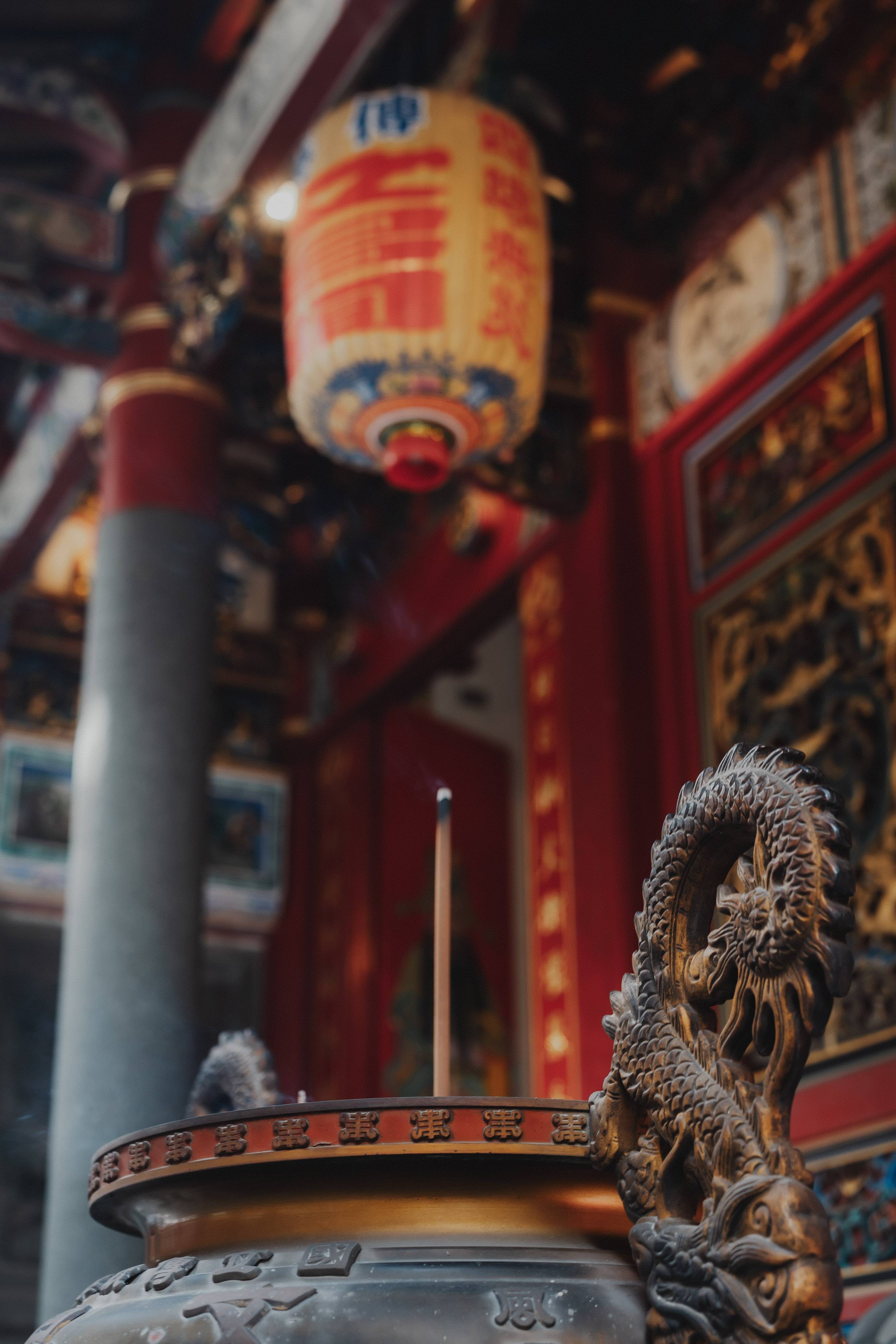
The lanterns above the front and main halls, as well as the Tiangong censer, were created by Wu Tun-Hou, recipient of the 4th National Folk Arts Heritage Award(民族藝術薪傳獎). His lanterns feature robust, symmetrical dragon motifs on a yellow background—symbolizing nobility and radiating warmth under candlelight. The pair of black silk lanterns in the main hall were created by Hsieh Tsung-Tse, son of master artisan Hsieh Shui-Mu, also a Folk Arts Heritage Award(民族藝術薪傳獎) laureate.


4. Inscription Plaques

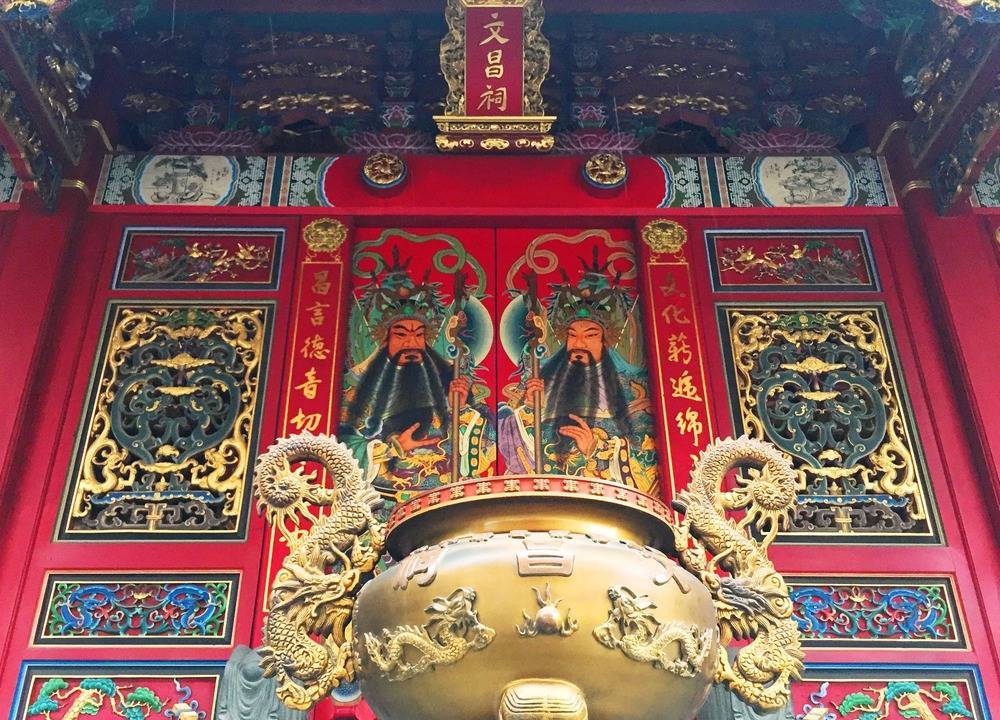
The temple’s name plaque was inscribed by Chen Chi-Lu, the first Minister of the Council for Cultural Affairs and an Academician of Academia Sinica. Woodcarving artisan Li Ping-Kuei crafted it following traditional methods.


5. Door Guardians

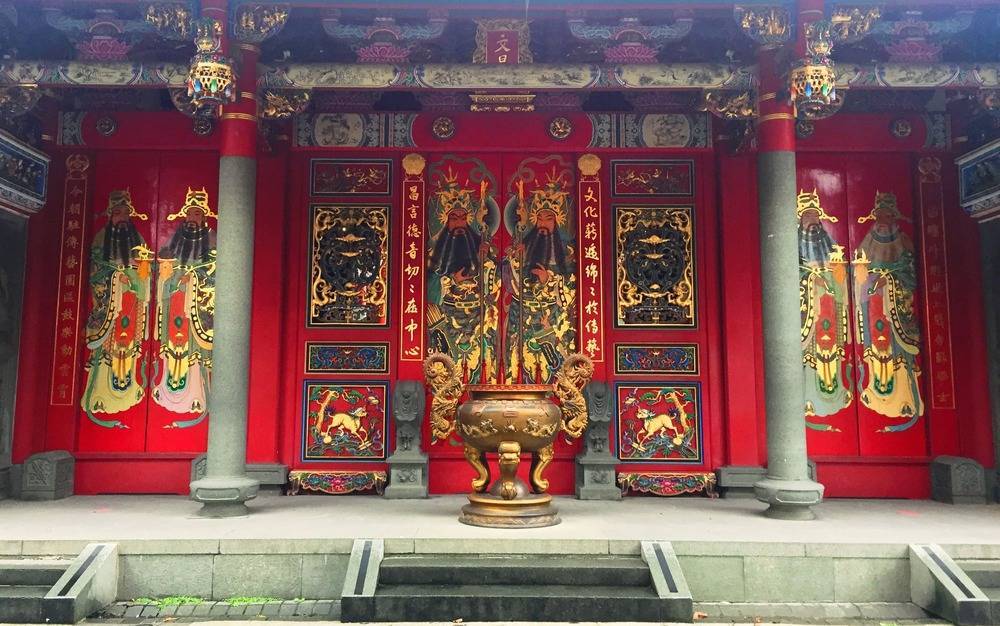
The temple’s door and beam paintings were completed by Pan Yueh-Hsiung, a descendant of Tainan’s renowned Pan family of temple painters and son of the famed Pan Li-Shui. Known for the signature “Four-Directional Gaze(四顧眼)” technique, his door gods appear to lock eyes with viewers from any angle. On the dragon gate (left side), the god holds an official’s hat and a deer—symbolizing promotions and blessings. On the tiger gate (right side), the god holds a peony and a wine cup—symbolizing wealth and honor.


6. Koji Pottery

Koji pottery decorations for Wenchang Temple were created by master Yeh Hsing-Yu. The front hall ridge is adorned with decorations featuring traditional folk stories and motifs commonly found in the Lanyang region, such as fish, shrimp, and flowers. Among these are depictions of the "Old Man of the South Pole" and the "Eight Immortals." On the walkway, stories such as "Four Invitations," "Seven Sages of the Bamboo Grove," and "Four Loves of Scholars" are also depicted, with characters drawn from opera, novels, and historical anecdotes.

X X 
X X

  • AI 客服